Somewhere in France. Late 1944.
The exact date doesn't matter. What matters is this: it was raining. It was cold. And two American soldiers were walking down a rural farm road in the dark somewhere in France, trying to get back to camp before anything went wrong.
My father was one of those soldiers. His name was James William Sears, or "Jimmie," as most everyone back home in his small Kentucky town knew him. Private First Class, 773rd Field Artillery Battalion, First United States Army. He wasn't a general. He wasn't a pilot. He didn't storm the beaches on D-Day. His ship had been delayed in New York Harbor for repairs, and by the time he set foot in France, the invasion was already history.
What he was, was a Wire and Telephone Man. A linesman. And if you've never heard that job title in the context of World War II, that's exactly the problem this channel was built to fix.
The Most Important Job You've Never Heard Of
Here's what nobody tells you about the artillery that helped win the war in Europe.
The guns were powerful. The crews were skilled. And the targets, the towns and roads and bridges and enemy positions, were called in by observers miles away who could see what the gunners couldn't.
But here's the thing. All of that depended on one thing working perfectly.
Communication.
Not radio. Not satellite. Wire. Miles and miles of telephone wire, unspooled directly onto the ground as the division advanced across France, because the advance was moving too fast to put it on poles.
As the Allies pushed across France in the summer and fall of 1944, the artillery units moved with them. And as they moved, the wire moved too, trailing behind them across fields, roads, farmland, and everything in between.
The faster you could communicate target coordinates to the artillery, the faster they could put weapons on the enemy. No communication, no accurate fire. No accurate fire, and suddenly the most powerful weapons on the battlefield go dark.
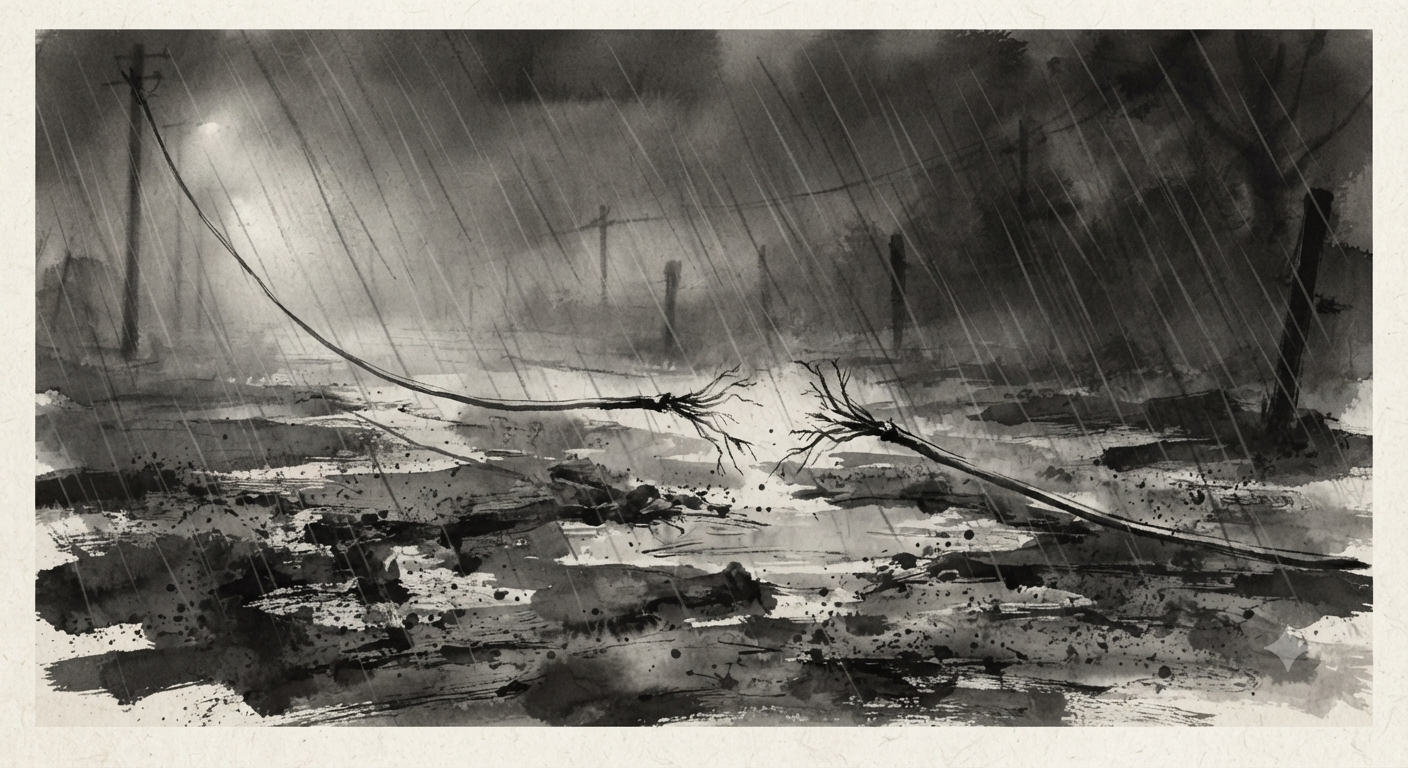
The problem was, that wire was lying on the ground. In the path of vehicles. In reach of enemy saboteurs. Exposed to weather, shrapnel, and the thousand ordinary disasters of a war moving at speed.
And when it broke, and it always broke, the guns went silent.
Until someone fixed it.
That someone was my father.
The Linesman
The linesmen of World War II never got famous. They didn't lead charges. They didn't fly the planes. They went out in the dark, in pairs, always in pairs, and they found the break in the wire and they fixed it.
Every night. In whatever the weather was doing. In whatever was happening out there beyond the edge of the camp.
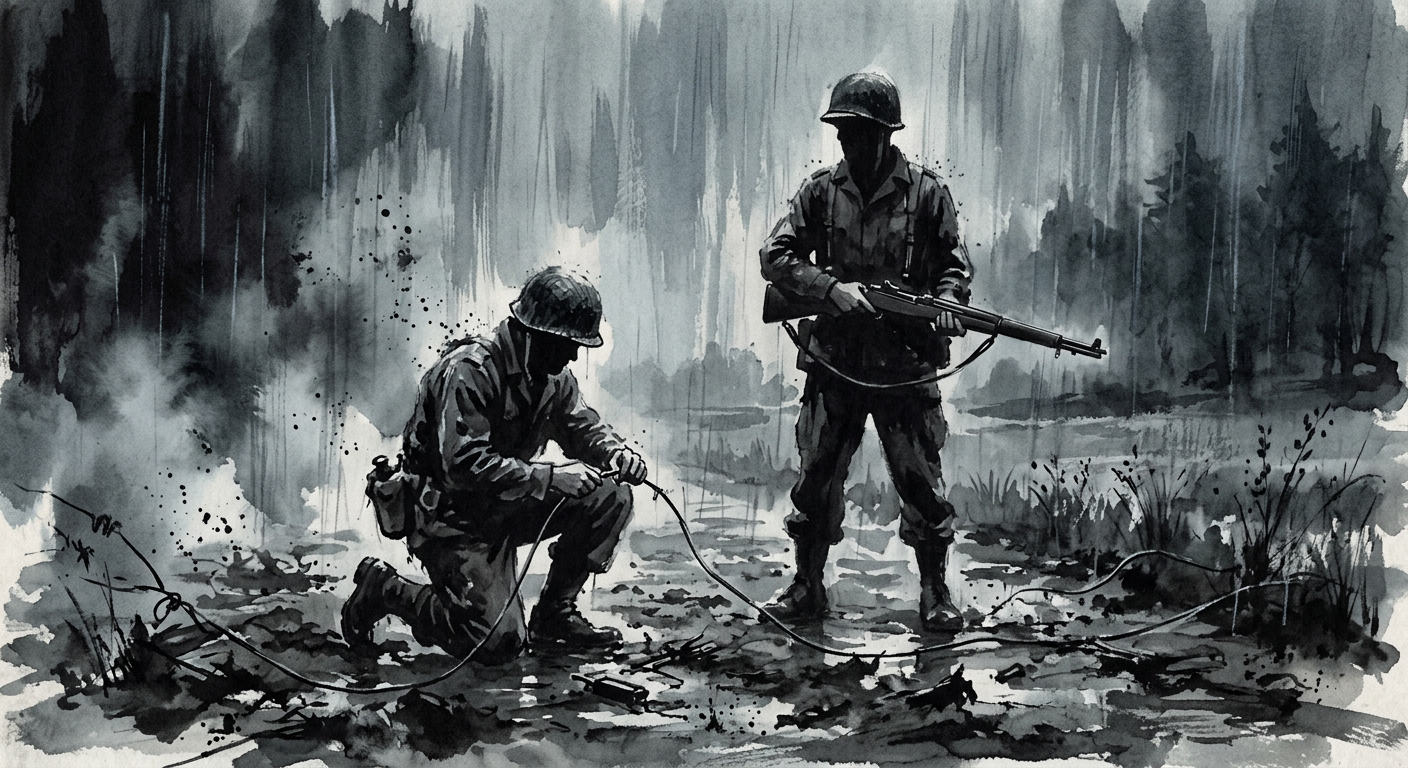
My father's unit had landed in France weeks after D-Day, delayed in New York Harbor while mechanics worked on the ship that was supposed to carry them to the invasion. By the time he arrived, the Allies were already pushing east, and his job was to make sure the communication lines that kept the advance moving never went dark for long.
He and his unit moved through France with the guns, laying wire, tracking breaks, going out after dark to find and repair whatever had been cut or crushed or torn apart since the last repair.
It was cold work. Wet work. Quiet and anonymous work that kept the whole machine running.
And one night, one ordinary, rainy, cold night somewhere on a rural French road, that work almost ended his life.
New York Yankees
Before we get to that night on the road, you need to understand something about the American Army in France in the fall of 1944.
They were scared of their own shadows.
And with good reason.
By late 1944, Allied commanders had discovered that German special forces were disguising themselves as American soldiers, wearing American uniforms, driving American jeeps, infiltrating Allied lines to cut wires, redirect traffic, and spread confusion.
The Americans fought back the only way they could.
With baseball.
At checkpoints across France, American MPs began grilling every soldier who approached. Not about military matters. About baseball scores. About state capitals. About Mickey Mouse. About things that every American boy who'd grown up in the United States would know without thinking, and that no German soldier, no matter how well trained, would ever answer naturally.
The password system worked the same way. Units were assigned a challenge and a countersign: two words, two halves of a proof of life. One soldier would say the challenge. The other was supposed to respond with the countersign. Together they confirmed you were both American. Alone, with the challenge hanging in the air and no answer coming back, it told you something else entirely.
My father's unit had been given one.
The challenge: "New York."
The countersign, the word that was supposed to come back: "Yankees."
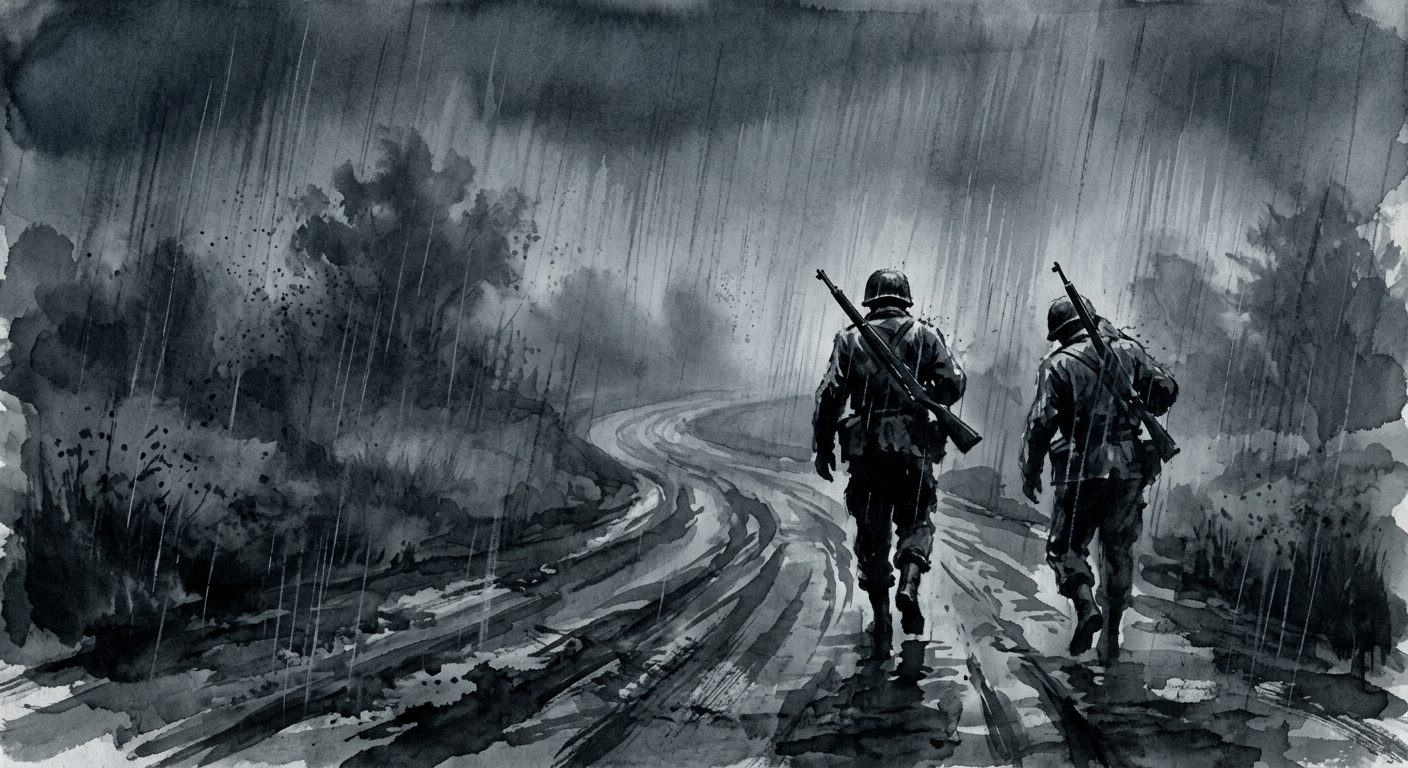
On the night this story takes place, my father and his buddy Frank had gone out after dark to repair a broken section of wire. Same as always. Same as every night. Two men, rifles at their sides, moving quietly through the wet French countryside to find the break and fix it.
They found it. Fixed it. And turned back for camp.
They were walking down a rural farm road when they saw them.
Dark figures coming toward them in the rain.
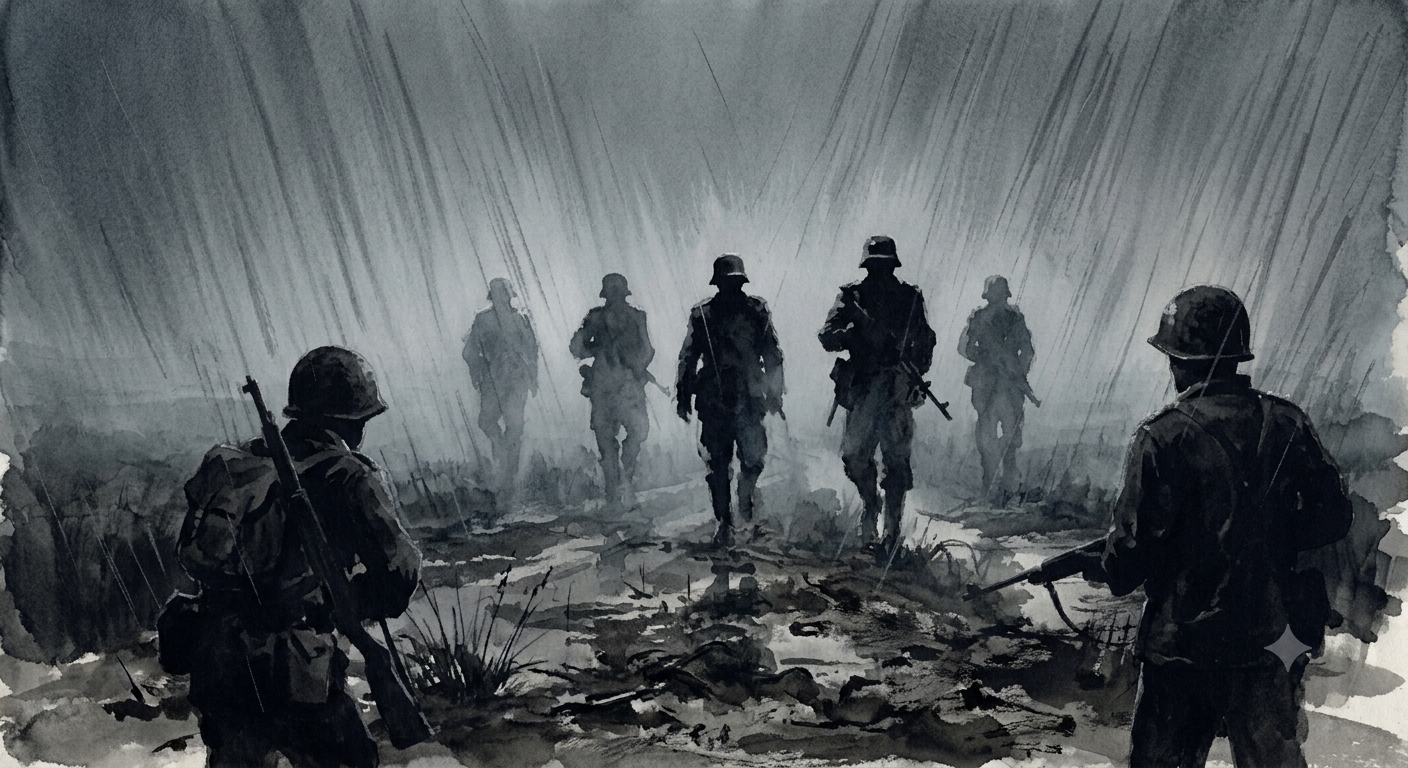
They couldn't tell who they were. Couldn't make out insignia in the dark and the rain. But they could count.
Five of them. Walking the same road. Coming closer.
My father and Frank were too close to run. Too visible to hide. Already outnumbered more than two to one.
They kept walking.
The two groups of soldiers met on the road and stopped.
Nobody said anything.
In the dark and the rain, at that distance, you couldn't tell an American helmet from a German one. You couldn't read a shoulder patch. You could barely see faces.
What you could do was listen.
Nobody spoke.
My father said later that those seconds felt longer than anything else in the war. Two groups of soldiers standing in the rain on a muddy road, each one waiting for the other to make the first move.
Nobody wanted to be the one who started it.
Then my father spoke.
Quietly. Voice unsteady. He threw out the challenge into the dark.
He waited. Listening for one word. Just one word back.
Yankees.
Spoken in an American voice, the way an American boy from Brooklyn or Baltimore or Baton Rouge would say it without thinking. One word that would tell him everyone on this road was going home tonight.
Nothing.
Just rain on helmets.
He said it again. Louder. In case the rain had swallowed it the first time.
Nothing.
He looked over at Frank. Frank had started moving his rifle. Slowly. Up from his hip. Ready.
One more time. Louder still. Not asking now. Almost demanding an answer from the dark.
Nothing.
The one word that would have let everyone breathe never came.
My father thought: five to two aren't the worst odds I've ever heard of. We have something like the high ground, even if it's only a slight rise in the road. And this Kentucky boy did not come all this way to go down without a fight.
If this is it, he thought, I'm taking as many of them with me as I can.
His hands tightened on his rifle.
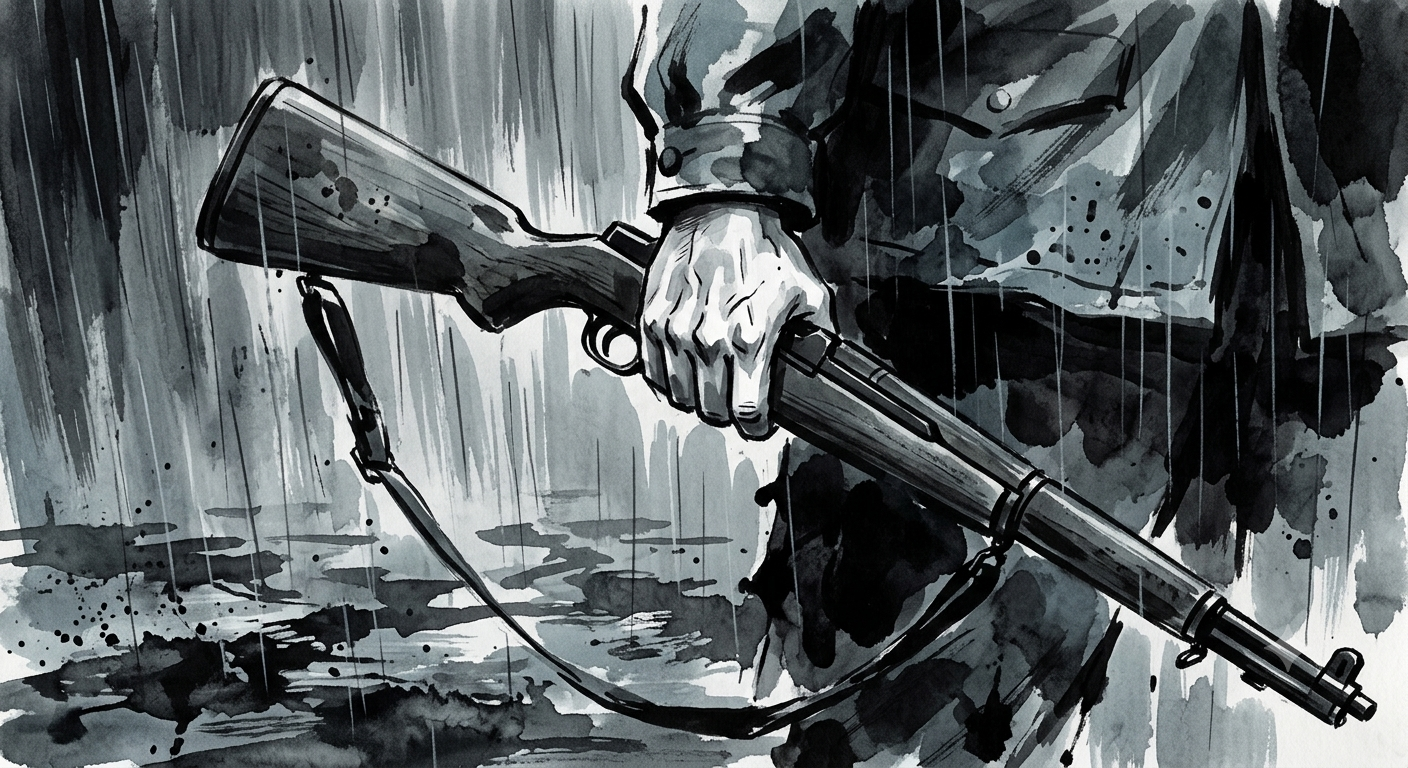
One of the soldiers took a step.
Not toward them.
Around them.
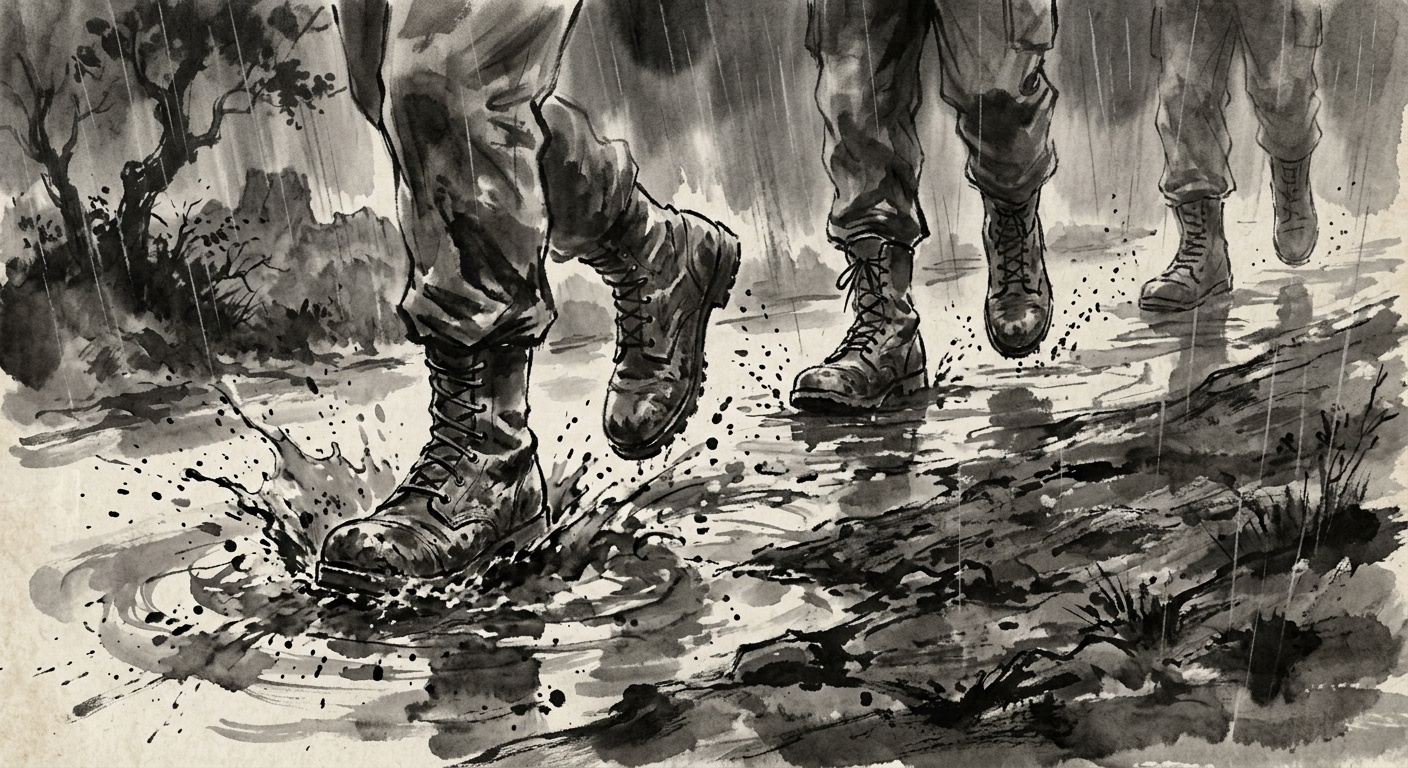
Then another followed the first.
Then the next.
Then the next, and the next, until all five of them had walked past my father and Frank and continued down the road in the rain and the dark and the silence, and disappeared.
My father and Frank just looked at each other.
Frank pushed his helmet back from his forehead like a confused kid trying to work something out.
"Huh," he said. "Well. I'll be damned."
My father, still trembling a little, still gripping his rifle, managed to agree.
"Yeah, Frank. I'll be damned."
What They Figured Out Walking Back to Camp
They never found out for certain who those soldiers were.
They didn't run after them. They didn't fire. They didn't raise an alarm.
They just walked back to camp.
But walking back, working through it quietly, my father and Frank figured they had a pretty good idea.
Those German soldiers, if that's what they were, were as cold as my father. As wet as Frank. As tired as both of them. They had five men against two, and they chose to keep walking.
Maybe they were as scared as the Americans were.
Maybe they were lost.
Maybe they were just done.
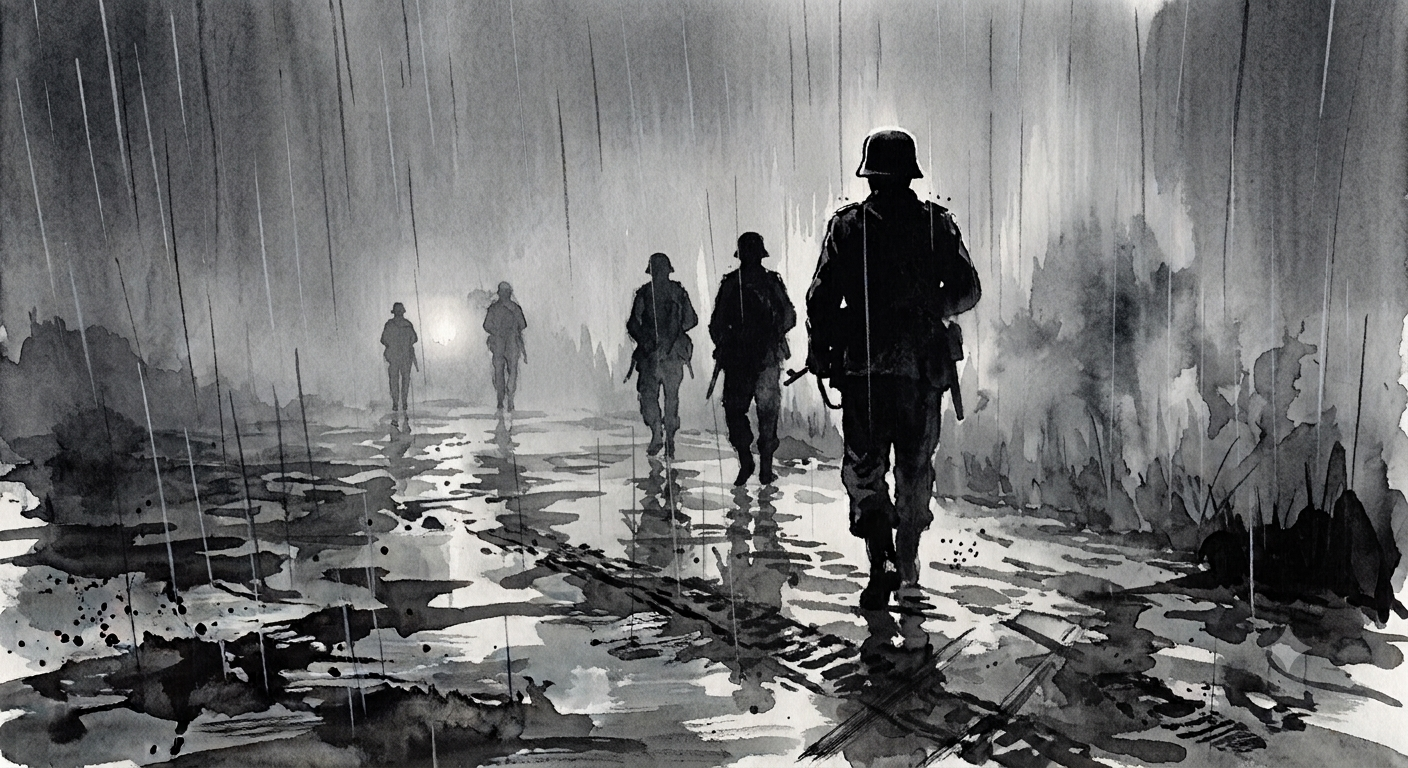
Because the truth that nobody puts in the history books is that by the fall of 1944, a lot of the German soldiers advancing and retreating and advancing again across France were not the invincible war machine of the early years. They were cold, hungry, undersupplied men who had been fighting for five years, watching the war turn against them, moving because they were ordered to move.
On that one night. On that one muddy road in France.
Two groups of soldiers chose the same thing without saying a word to each other.
To let it go.
To keep walking.
To go home.
Why This Channel Exists
My father came home from France. He came home with partial hearing loss in one ear, from a night he walked in front of the artillery guns while they fired without warning. He came home quieter than he'd left, the way most of them did.
He didn't talk much about what happened over there. Maybe he didn't know how. Maybe he didn't think anyone wanted to hear.
But he told me that story. About the rain, and the road, and the five soldiers who kept walking.
I think he told it to me because it was the night that made the most sense to him. Out of everything that happened — all the noise and the fear and the loss — there was this one moment of silence where everyone on that road made the same human choice.
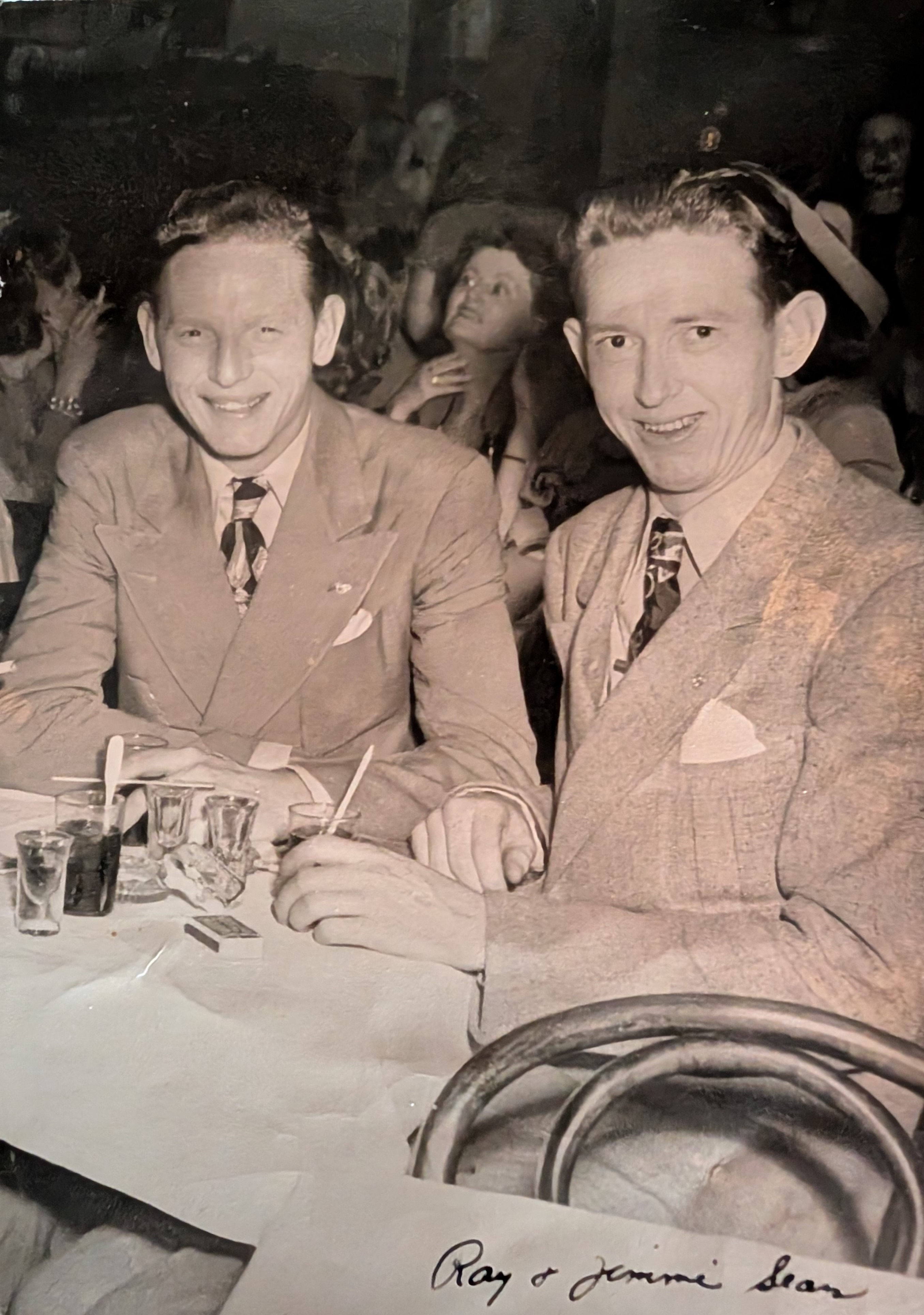
My father isn't alone in that photograph. That's his brother Ray beside him, my uncle, who served in the Navy in the same war. I don't know his stories the way I know my father's. His story is still waiting to be told, and maybe, one day, we'll get to tell it here.
That's the truth about this whole generation: for every story that got told, there are more still waiting: in shoeboxes, in old recordings, in the memory of whoever heard them last. This place exists to gather them while there's still time.
Private First Class James W. Sears, 773rd Field Artillery Battalion, First United States Army, was awarded the Bronze Star Medal for his service as a Wire and Telephone Man in France and Germany from September to December 1944.
The citation reads: "By his skill and personal bravery, he assured constant wire communications with forward observation posts. Frequently subjected to intense enemy fire, he unhesitatingly worked in exposed locations, laying and maintaining vital wire lines."

He was not famous. His name is not on a monument.
But the United States Army knew what he did out there in the dark. And now you do too.
I'm here because he took a step back and let five soldiers walk past him on a rainy road in France.
And I thought that story deserved to be told.